5 Lessons to Learn from So Late in the Day by Claire Keegan
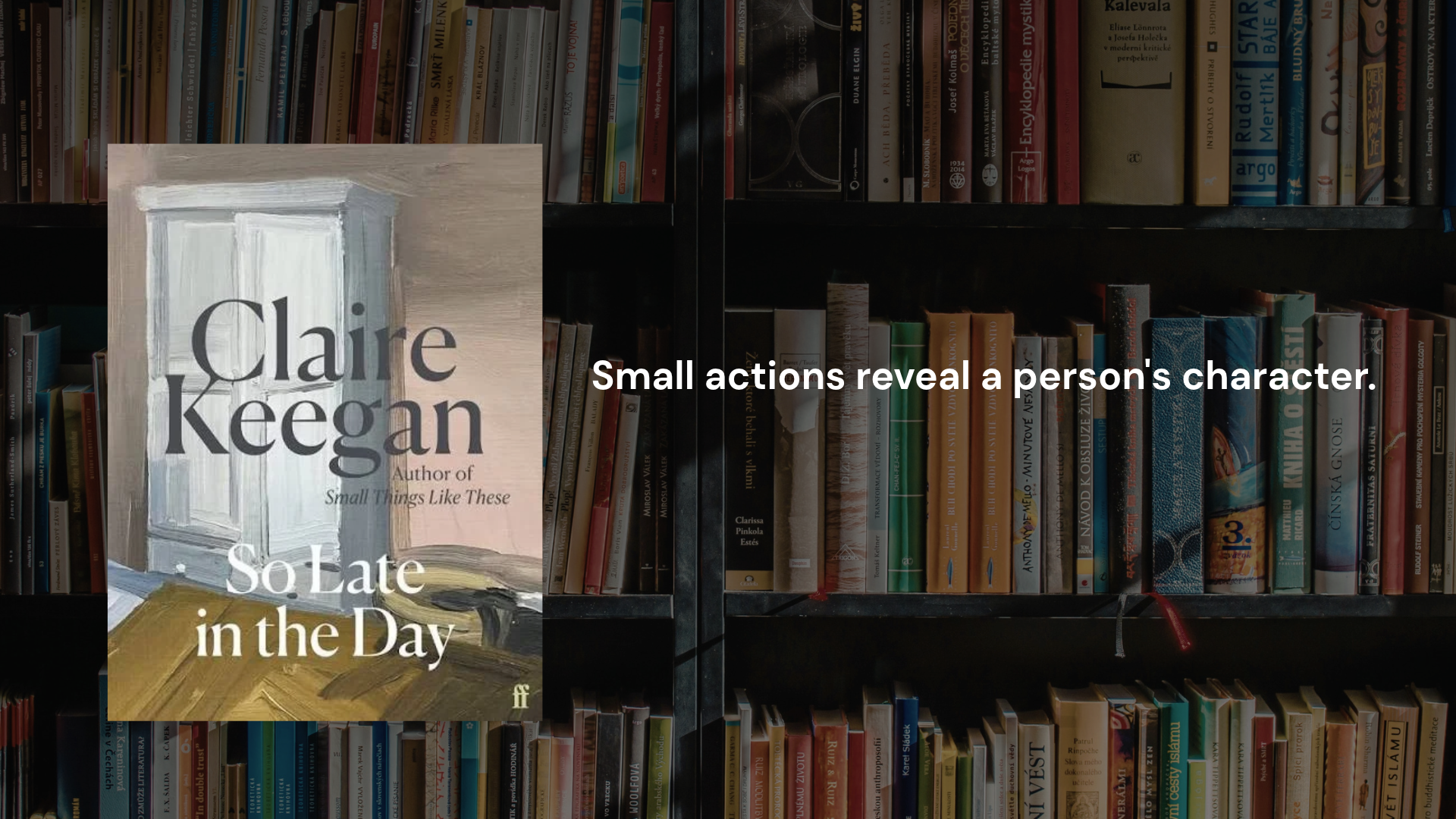
So Late in the Day by Claire Keegan is a short but thought-provoking work of literary fiction that explores relationships, regret, gender expectations, and the quiet ways people reveal their true character.
The story follows Cathal, a man reflecting on his relationship with Sabine and the events that shaped their connection.
Through an ordinary day and memories of a relationship that did not work out, Keegan examines how everyday attitudes, small decisions, and unspoken assumptions can have lasting consequences. The story does not rely on dramatic twists to make its point.
Instead, it invites readers to look closely at the details of human behaviour and consider what they reveal about love, responsibility, and emotional maturity.
Despite its brevity, So Late in the Day raises important questions about how we treat the people closest to us and whether we recognise our own shortcomings.
5 Lessons readers can learn from Claire Keegan's book
1. Small actions reveal a person's character
One of the central lessons of So Late in the Day is that character is often revealed through ordinary behaviour rather than grand gestures.
Cathal's interactions with Sabine expose attitudes that might initially appear insignificant. His assumptions, habits, and responses to everyday situations reveal how he views relationships and the role women should play within them.
The story encourages readers to look beyond what people say about themselves. Someone may describe themselves as caring, fair, or considerate, but their everyday actions often provide a clearer picture of their values.
This lesson applies to friendships, romantic relationships, and professional environments. The way someone listens, shares responsibilities, responds to disagreement, or treats people when there is nothing to gain can tell us a great deal about their character.
Actions often communicate what words try to conceal. Paying attention to these details can help us understand others more honestly and recognise the habits we may need to change in ourselves.
2. Love requires more than good intentions
Romantic relationships cannot thrive on attraction or affection alone. They also require consideration, compromise, and a willingness to recognise another person's needs.
In So Late in the Day, Cathal's relationship with Sabine highlights the distance that can emerge when one person fails to appreciate the other fully. His perspective reveals how someone can believe they are behaving reasonably while overlooking the impact of their actions.
The story challenges the idea that being in a relationship automatically makes someone a good partner. Love involves active participation: listening, sharing responsibilities, respecting boundaries, and making space for another person's preferences.
It also requires questioning one's own assumptions rather than expecting a partner to adapt continually.
The lesson is that healthy relationships are built through everyday choices. Small acts of consideration can strengthen a connection, while repeated disregard for another person's needs can gradually undermine it.
Love is not only about what we feel for someone; it is also about how we choose to treat them.
3. Traditional gender roles can damage relationships
Claire Keegan explores how deeply traditional gender expectations can influence relationships, even when people do not openly acknowledge them.
Cathal's behaviour reflects assumptions about women, domestic responsibilities, and what a relationship should look like. These expectations shape his interactions with Sabine and reveal the imbalance that can develop when one person's comfort is prioritised over another's independence.
The story highlights how gender inequality does not always appear through obvious hostility. It can also emerge through everyday expectations, unequal responsibilities, and the belief that one partner should naturally accommodate the other.
These patterns can be difficult to recognise because they are often treated as normal. However, when they go unquestioned, they can prevent both partners from building a relationship based on genuine equality.
The lesson is to examine the expectations we bring into our relationships. Household responsibilities, emotional labour, and personal choices should not automatically fall along gender lines.
A healthy relationship allows both people to feel valued, respected, and free to make decisions about their own lives.
4. Regret often comes from what we fail to recognise
One of the most thought-provoking aspects of So Late in the Day is the way it examines regret through reflection and memory.
Cathal's recollections encourage readers to consider how people interpret their own past behaviour. We may remember certain events as insignificant while overlooking how those moments affected someone else.
Sometimes, the consequences of our choices become clearer only after a relationship has changed or an opportunity has disappeared. By then, understanding what went wrong may not be enough to repair the damage.
Keegan's story reminds us that self-awareness requires more than remembering what happened. It requires an honest examination of our own role in those events.
This lesson applies to all kinds of relationships. Instead of immediately defending our intentions, we can ask whether our behaviour was considerate and how it may have affected others.
Regret can be painful, but it can also reveal areas where we need to grow. The important thing is to learn from our mistakes while we still have the opportunity to make better choices.
Also Read 5 Books you must read to learn how to say no confidently
5. Emotional maturity begins with self-awareness
Another important lesson from the story is that emotional maturity involves recognising our own limitations and taking responsibility for our behaviour.
It is easy to believe that problems in a relationship are caused entirely by the other person. We may focus on their reactions, their expectations, or the ways they have disappointed us without examining our own contribution to the situation.
Cathal's perspective invites readers to look beyond a person's self-image and consider the gap between how someone sees themselves and how their actions affect others.
True self-awareness requires us to question our assumptions, listen to perspectives that challenge us, and acknowledge when our behaviour has been unfair.
This does not mean blaming ourselves for every problem or accepting responsibility for things beyond our control. Rather, it means recognising the parts of our behaviour that we can change.
The lesson is simple: personal growth begins when we become willing to examine ourselves honestly. Understanding our own patterns can help us build healthier relationships and avoid repeating the same mistakes.
Final thoughts
So Late in the Day by Claire Keegan explores love, gender, regret, and human behaviour through Cathal’s reflections on his relationship with Sabine. It shows how everyday actions and ingrained assumptions can shape relationships.
The five lessons highlight the importance of consideration, challenging gender expectations, learning from regret, and practising self-awareness. The story reminds us that how we treat others matters, and some lessons become clear only in hindsight.
This content is published by YourStory and has not been created or edited by Hello Headlines. View original