Better Drains, Rainwater Harvesting and Urban Greening: Bengaluru's Plan for Five Neighbourhoods
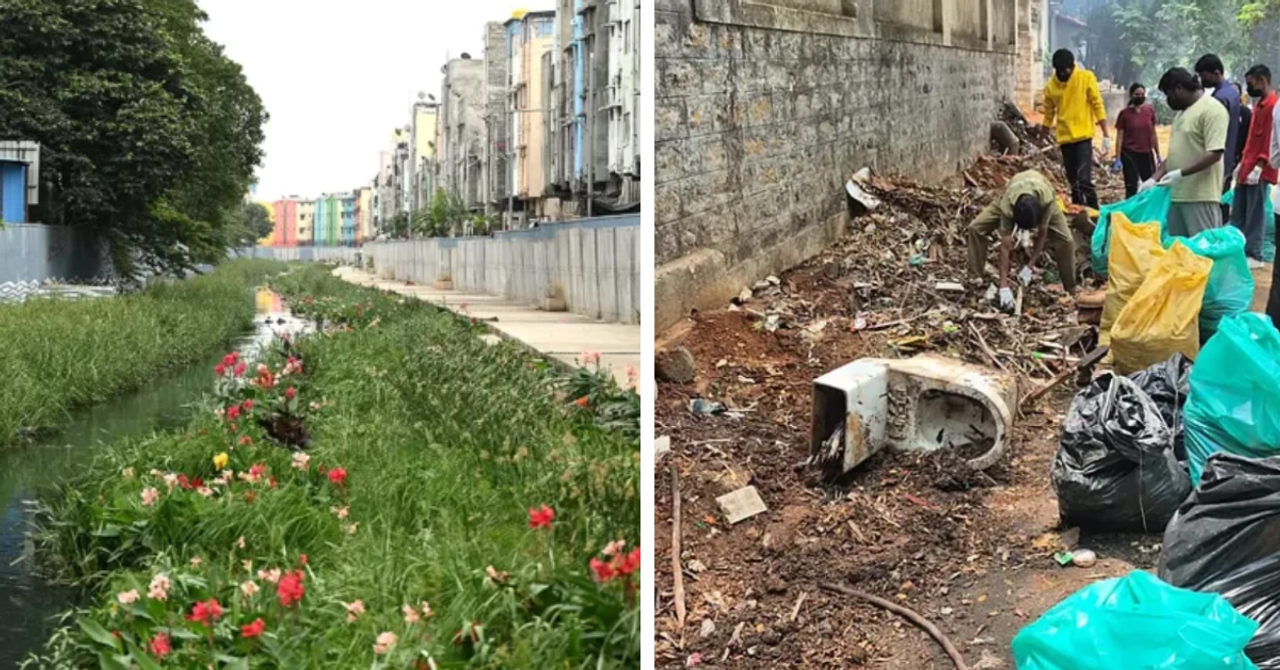
Once known as the Garden City for its tree-lined avenues, blooming parks and pleasant weather, Bengaluru is now facing a growing question: How can a rapidly expanding city make room for nature while preparing for heavier rains, water shortages and rising temperatures?
Now, a neighbourhood-level climate planning exercise across five wards aims to address some of these concerns through better drainage, rainwater management and urban greening.
The Greater Bengaluru Authority (GBA) has prepared ward-level Climate Action Plans for five pilot wards across the city, identifying environmental challenges and proposing interventions suited to the conditions of each neighbourhood.
The initiative is now awaiting budgetary approval from the respective city corporations before implementation can begin.
The five wards selected for the pilot are Shantinagar in Central Bengaluru, Jakkur in the North, Begur in the South, Vijinapura in the East and Nalwadi Krishnaraja Wadiyar ward in the West.
Developed under the GBA's Climate Action Cell, the plans aim to take climate planning beyond city-wide recommendations and identify what individual neighbourhoods need.
The assessments cover energy and buildings, transportation, solid waste management, urban planning, greenery and biodiversity, water management, wastewater and stormwater management, and disaster preparedness.
According to The New Indian Express, the plans were prepared following sector-wise assessments and consultations with residents, experts and other stakeholders. The exercise recognises that climate-related challenges are not uniform across Bengaluru.
While some localities experience recurring flooding, others face water scarcity, declining green cover, rising temperatures or inadequate waste management.
Why Bengaluru needs neighbourhood-level climate planning
The city's contrasting water challenges illustrate why localised planning matters. Bengaluru experiences heavy surface runoff during the monsoon, even as several neighbourhoods face groundwater depletion and water shortages during summer.
A March 18, 2026 report by Mongabay-India, which examined the ward-level planning exercise, highlighted how geography influences flood vulnerability.
For instance, Shantinagar, a densely populated urban ward, lies in a downstream valley zone. Hydrological assessments by WELL Labs and Bengaluru's Climate Action Cell found that floodwater can originate beyond the ward's boundaries, making flooding a problem that cannot always be addressed through isolated drainage work within one locality.

Anam Husain, programme associate for Urban Water at WELL Labs, told Mongabay-India that nature-based interventions such as rain gardens, bioswales, permeable surfaces and small retention systems can help slow down rainwater runoff and improve groundwater infiltration.
These interventions offer ways to manage excess rainwater closer to where it falls, while also reducing pressure on conventional drainage infrastructure.
Rainwater harvesting and groundwater recharge are particularly relevant in a city where water scarcity and monsoon runoff exist side by side. Alongside improving stormwater management, wastewater reuse and stormwater reuse can contribute to longer-term water security.
Bringing green infrastructure into urban planning
Urban greening is another important component of Bengaluru's climate planning exercise.
In neighbourhoods experiencing rising temperatures, the GBA is considering measures such as increasing green cover, using heat-reflective cool paints and establishing cool shelters.
These interventions can help address the urban heat island effect, in which built-up areas with extensive concrete surfaces and limited vegetation retain more heat than surrounding areas.
Bengaluru's existing Climate Action and Resilience Plan also identifies nature-based solutions as an important part of urban development.
View this post on InstagramA post shared by ಬೆಂಗಳೂರು ದಕ್ಷಿಣ ನಗರ ಪಾಲಿಕೆ (Bengaluru South City Corporation) (@bscc.gba)
Its sectoral recommendations include restoring the city's blue-green networks, increasing tree canopy and expanding green and permeable surfaces to help reduce flood and heat-related risks.
The plan sets targets to increase the city's tree canopy by 10% from its baseline by 2030 and 20% by 2040. It also proposes increasing green cover and permeable surfaces to 40% of the city's area by 2040.
From climate plans to neighbourhood-level action
Public participation has also been part of the planning process.
Just recently, The Better India documented how Bengaluru residents are taking small, collective steps to care for their city's shared spaces. From removing 110 kg of plastic waste around Madiwala Lake during a 75-minute plogging drive to watering hundreds of saplings at Vengaiah Lake through the Bhagiratha initiative, the report highlighted how citizen participation can complement urban conservation efforts. Read the report.
Other efforts include residents in Balagere, Panathur and Varthur clearing accumulated roadside dust, and volunteers working with civic authorities to restore neglected footpaths and public spaces.
The Greater Bengaluru Authority's proposed Climate Action Plans across five wards take this approach further by seeking to integrate local environmental needs into formal urban planning.
The five-ward pilot is intended to provide a model for extending climate action planning to other neighbourhoods under the GBA.
For Bengaluru, the next step will be translating these local assessments into funded projects that improve drainage, strengthen water management and expand green infrastructure.
The effectiveness of the exercise will ultimately depend on how consistently these proposals are implemented and monitored at the neighbourhood level.
Sources:
‘GBA goes micro local with ward-level climate plans’: By Express News Service, Published on 4 November 2026
‘Ward-level plans bring climate action closer to communities’: By Mahima Jain, Published on 18 March 2026
This content is published by The Better India and has not been created or edited by Hello Headlines. View original