The Economist’s 2027 Forecast: Is India Ready for What’s Coming?
Kashmir, Observer, Jammu, Srinagar, Latest Kashmir News, Kashmir News, Kashmir Latest News
The world in 2027 looks full of political tensions, economic uncertainty and competing interests.
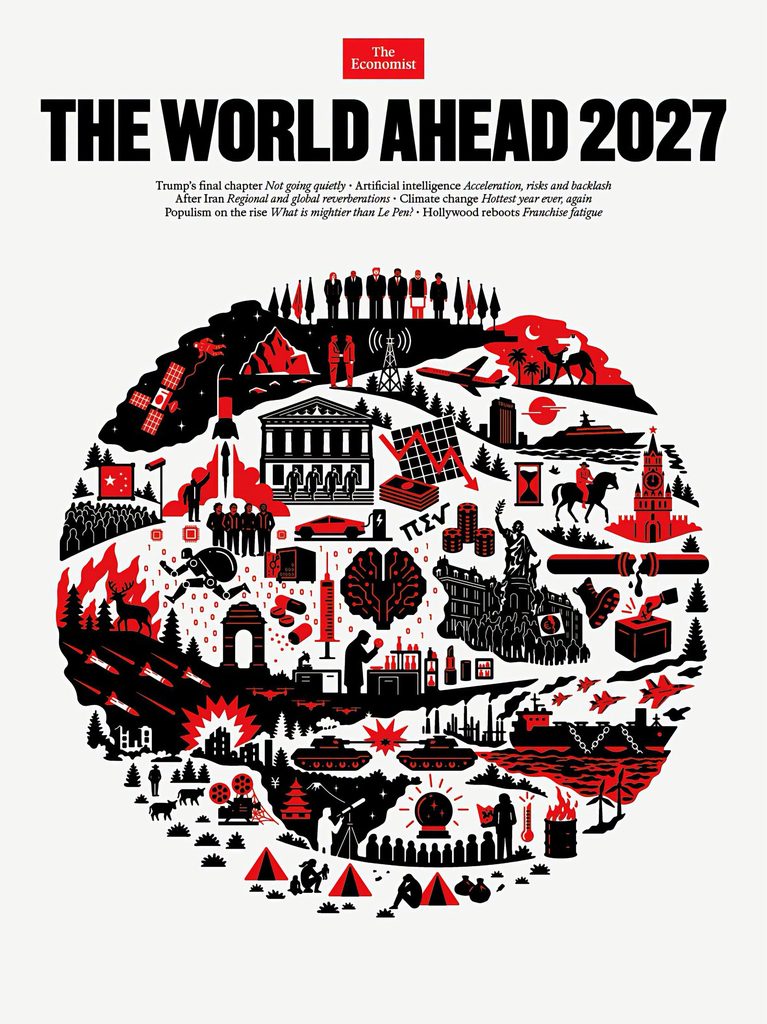
Leaders, missiles, financial markets, artificial intelligence, oil pipelines, forest fires and military aircraft fill the cover of The Economist’s The World Ahead 2027.
The cover gives a sense of the challenges the world could face in the coming year. Decisions made in powerful countries could have consequences far beyond their borders, affecting businesses, workers and ordinary families.
India has plenty at stake.
New Delhi’s plans to become a major manufacturing centre, attract foreign investment and play a bigger role in the global economy will depend partly on how the world deals with political tensions, new technology and economic uncertainty.
Donald Trump features prominently on the cover. His decisions on tariffs, trade, immigration and foreign policy could change how countries and businesses deal with one another.
India could gain from companies looking for alternatives to China. The country has been trying to attract investment in electronics, automobiles, pharmaceuticals and other industries.
As companies rethink where they make their products, India could get a bigger share of global manufacturing.
But the competition is tough.
Vietnam, Indonesia, Mexico and other countries are also trying to attract these companies. India will need to make it easier to set up factories, hire workers and export products if it wants to turn this opportunity into real economic growth.
Trump’s trade policies could also create difficulties. Higher tariffs and restrictions between major economies could make goods more expensive, disrupt supply chains and reduce demand. Indian exporters could face these problems even as new manufacturing opportunities open up.
Artificial intelligence is another major theme on the cover.
AI is changing the way companies work, and its impact on jobs could become much bigger in the coming years.
India’s technology industry could benefit from this change. Companies can use AI to work faster, develop new products and provide services to customers around the world.
But there are concerns too.
India’s software services, customer support and administrative sectors employ millions of people. AI could take over some of their routine work, reducing the need for certain jobs while creating demand for new skills.
This puts India’s education and training systems to the test.
Can they prepare young people for the jobs that are coming? Much will depend on how quickly workers can learn new skills and adapt as companies bring AI into their daily operations.
The cover also brings financial markets, oil and war into the picture.
The war involving Iran and tensions in the Middle East could push up oil prices and disrupt shipping routes. This is a major concern for India, which imports much of the oil it needs.
If oil prices rise sharply, petrol, diesel and transport could become more expensive. This could push up inflation and put pressure on government finances. The cost of importing fertilisers, machinery and other goods could also increase.
Higher fuel and food prices would put more pressure on household budgets. Keeping energy costs under control will be important for India to protect its economy and sustain growth.
Climate change is another issue highlighted through images of forest fires and environmental destruction.
It is already affecting India’s economy in several ways. Extreme heat, irregular rainfall, floods and water shortages are putting pressure on farming, cities and public infrastructure.
Farmers face uncertainty over their crops and incomes. Cities need more electricity and water as temperatures rise. Roads, bridges and other infrastructure are also at greater risk from floods and extreme weather.
These problems can push up food prices, reduce rural incomes and increase the cost of building and maintaining infrastructure. India will have to spend more on protecting communities and preparing for extreme weather.
The cost of ignoring these risks could be much higher.
The cover also points to the growing influence of populism. Political movements in many countries are gaining support by raising concerns about inequality, immigration, rising prices and a lack of jobs.
India faces similar questions about who benefits from economic growth. The economy can grow while millions of people continue to struggle with low wages, unemployment, expensive housing and the rising cost of education.
These concerns influence public opinion and put pressure on governments to deliver better results.
The references to Hollywood and franchise fatigue point to another change in the global economy.
Entertainment companies are finding it harder to hold audience interest as viewing habits and technology change. They are having to rethink how they make money and attract customers. The same pressure to change is being felt in other industries too.
Together, these themes show the challenges India may face in 2027. While some developments could open up new opportunities, others could affect businesses, jobs and the everyday expenses of ordinary families.
India has a large market, a growing industrial base and an increasingly important place in the global economy. These strengths could help it attract investment and deal with outside pressures.
But much will depend on what happens at home.
Can India create enough jobs for its young population? Can it keep energy costs under control? Can its businesses compete in global markets and prepare workers for new technology?
These are the questions that will test India’s economic ambitions.
Much of what happens in 2027 will depend on decisions made in Washington, Beijing, Moscow and other powerful capitals. Their impact will be felt in Indian factories, offices, farms and homes.
New Delhi cannot decide what the rest of the world does, but it can prepare for the changes ahead.
How well it does so could make a big difference to its economic engine.
The post The Economist’s 2027 Forecast: Is India Ready for What’s Coming? appeared first on Kashmir Observer.
This content is published by Kashmir Observer and has not been created or edited by Hello Headlines. View original