Why Delhi’s Air Can Be Most Polluted Before 9 AM & What That Means for Your Morning Walk
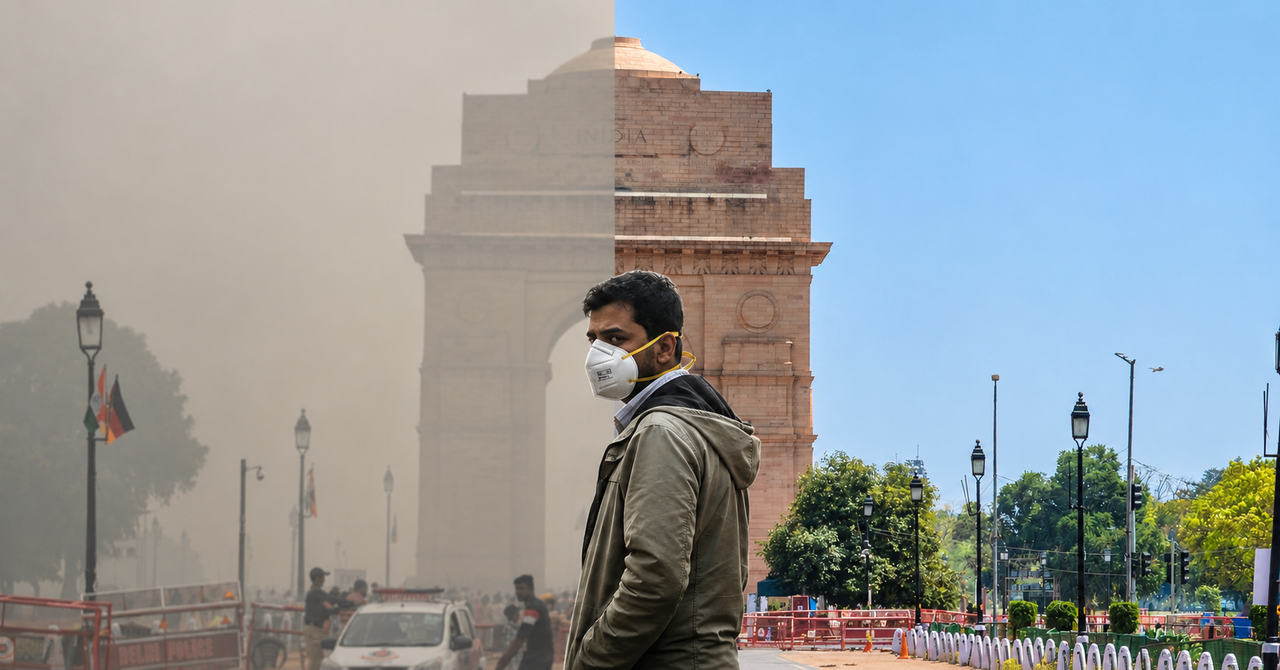
The cool, quiet hour after dawn feels like the best time to step outside in October, yet AIIMS says pollution stays highest in the early morning until about 8:30 or 9 am.
Delhi's air shows how quickly things can turn. At 4 pm on Tuesday, 20 October, the Central Pollution Control Board put the Air Quality Index (AQI) at 179, which counts as moderate. By 7 am the next day, the Air Quality Early Warning System showed 219, which counts as poor, and it forecast 342 for 22 October.
The invisible lid above the city
The explanation lies in physics. Normally, temperature falls with height, so air near the ground mixes and carries pollutants upwards. University of Reading researchers Ankit Bhandekar and Laura Wilcox explain that a temperature inversion reverses this, placing warmer air above colder air like a lid on a pot.
Pollutants stay near the ground, and the mixing height, the level up to which they can disperse, shrinks from about one kilometre in summer to a few hundred metres in winter.
The lid sits lowest after dark. Sarath Guttikunda, founder of UrbanEmissions.Info, told Frontline that in November and December the inversion height can fall below 50 metres at night and hover around 200 to 500 metres by day. As the sun climbs, the layer lifts and the smog thins, which is why the early hours feel the worst.
A bowl that holds on to smoke
Delhi's geography makes this even worse. The city sits in the Indo-Gangetic plains, with the Himalayas to the north and the smaller Aravalli range to the south, which help create a natural bowl.

The Himalayas block air from flowing northward, so pollution must travel across northern India before it finds an exit over the Bay of Bengal. The monsoon rains that cleanse the air from July to September have gone by October, and winds slow down.
Small shifts in weather can therefore tip the balance fast. Bhandekar and Wilcox note that on 5 January, 2025, favourable winds allowed authorities to lift some restrictions, yet by 15 January calmer winds and falling temperatures forced the city's strictest curbs. Delhi had not gained more cars, factories or construction sites from one week to the next.
The Centre for Science and Environment also found something similar in winter 2023, when slow winds appeared to drive the most smog episodes in six years even though stubble fires in Punjab and Haryana nearly matched 2022.
Solutions that follow the weather
If weather decides when pollution turns, the Reading researchers argue, policy should follow the forecast rather than chase the smog.
They suggest tightening construction restrictions when inversions are predicted, even on seemingly clear days, and designing measures for the whole Indo-Gangetic plains, since many of India's most polluted cities share the same conditions.

Delhi's Graded Response Action Plan already lets authorities act in advance on forecasts, with curbs ranging from dust control to limits on construction and vehicle movement.
The other lever sits upwind, because smoke from stubble burning in Punjab and Haryana, where farmers clear fields quickly for wheat sowing, adds to the load each October and November. Some farmers avoid it by sowing wheat directly with a Happy Seeder, spraying a waste decomposer solution on straw, or selling paddy straw for conversion into fuel pellets.
What you can do this season
First, treat the cool early hours as the risky ones, since AIIMS advises staying indoors at peak hours and choosing indoor exercise over outdoor runs or cycling. Second, check the AQI daily on the SAMEER app, which AIIMS recommends, and wear an N95 mask if you step out.
Third, take extra care of children, older people and anyone with heart or lung conditions, whom the AIIMS advisory flags as most at risk. Fourth, skip driving once a week to trim local emissions, as AIIMS suggests.
The advice does not reach everyone equally. Business Standard reports that an air purifier costing ₹12,000 to ₹15,000 is out of reach for many informal workers, and that indoor air can still hold up to 70% of outdoor PM2.5 without sealed windows and purifiers. That is why forecast-led curbs and cleaner fields matter as much as personal habits.
Delhi cannot change the bowl it sits in or the chill that settles each night, but it can change what it puts into the air beneath the lid. With poor air forecast for 21 to 23 October, the next crisp, quiet dawn is better read as a warning than a relief.
Sources:
1. 'Delhi's air quality slips to poor category, forecast to worsen further': by Akshita Singh for Business Standard, Published on 21 October, 2026
2. 'How weather patterns and faraway mountains make Delhi the world's most polluted megacity': by Ankit Bhandekar and Laura Wilcox for The Conversation (republished by Newslaundry), Published on 3 March, 2025
3. 'Delhi's Air Pollution Explained!': by R. Ramachandran for Frontline, Published on 9 December, 2016
4. 'Delhi's annual battle with air pollution: Aiims issues health advisory': by Barkha Mathur for Business Standard, Published on 6 November, 2025
5. '2023 ended on a high pollution note, says latest CSE analysis of winter air pollution levels in Delhi-NCR': by Centre for Science and Environment for CSE (press release), Published on 4 January, 2024
This content is published by The Better India and has not been created or edited by Hello Headlines. View original