Rage Over E20 Fuel Was A ‘Paid Campaign’, Says Nitin Gadkari As Centre Allows E100 Flex-Fuel Vehicles
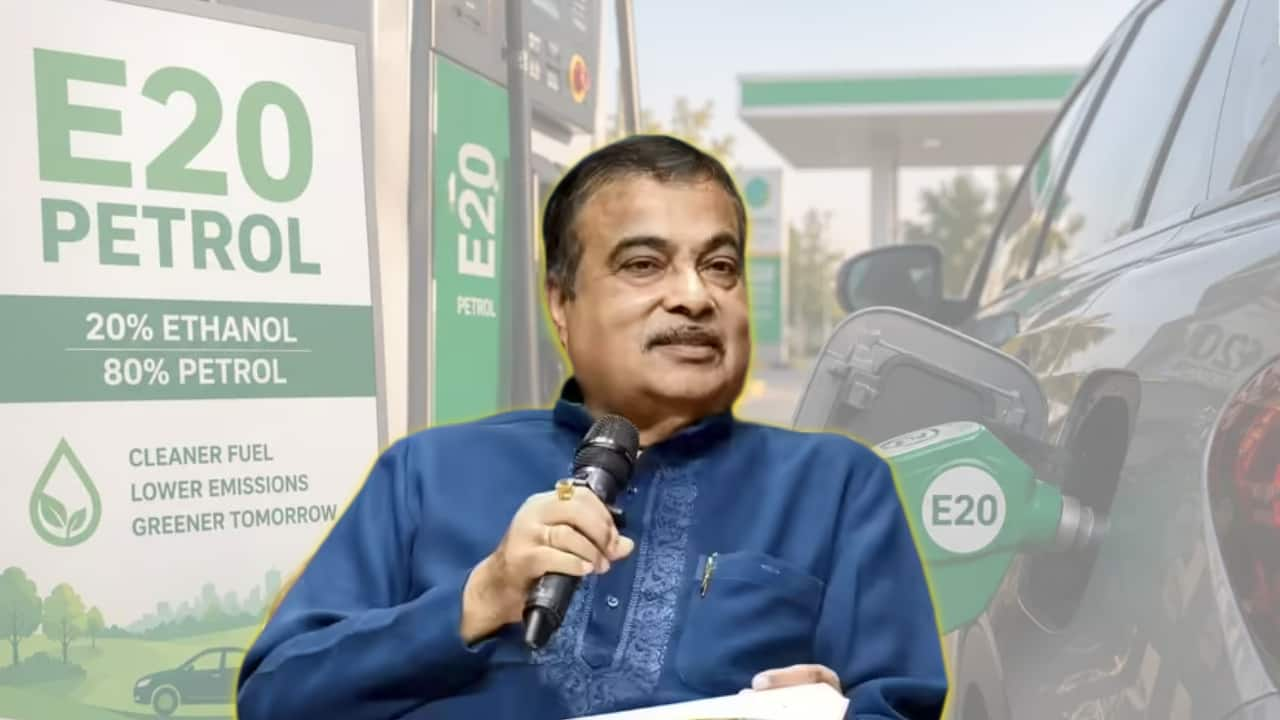
Union Road Transport Minister Nitin Gadkari on Tuesday dismissed the backlash against E20 petrol, alleging that the controversy was driven by a “paid campaign”. His remarks came a day after the government amended the Central Motor Vehicles Rules, 1989, to allow flex-fuel vehicles capable of running on blends containing up to 100% ethanol. Speaking at an event organised by industry body CII, Gadkari said ethanol blending could reduce India's dependence on imported fossil fuels and help conserve foreign exchange.
“Three months ago, huge noise (khub haala)) was made against the E20 (20 per cent ethanol-blended petrol) fuel; now rage against E20 fuel is over...It was a paid campaign,” he said.
Gadkari Defends E20 Petrol Blending
Gadkari said more than 20 crore two-wheelers and over 3 crore petrol cars had been using E19-E20 fuel blends over the past three years. He added that there was no verified evidence of widespread engine failures or vehicle breakdowns attributable to ethanol blending.
E20 petrol contains 20% ethanol and 80% petrol. Its rollout drew criticism from opposition parties and consumer groups over concerns about the impact on older vehicles that were not specifically designed for the blend.
India's Ethanol Blended Petrol (EBP) Programme began with a pilot in 2001, followed by the introduction of E5 in 2006. Blending levels remained relatively low until 2013-14, before increasing progressively alongside the expansion of production capacity, infrastructure and regulatory support.
ALSO READ: Bengal Teen Rape-Murder Accused Killed After Snatching Gun, Second Such Incident In 3 Months
Centre Opens Door To E100 Flex-Fuel Vehicles
The latest changes to the Central Motor Vehicles Rules allow flex-fuel vehicles capable of operating on fuel blends containing up to E100, or nearly pure ethanol.
The government has promoted ethanol blending as a way to reduce crude oil imports, support domestic agricultural producers and lower dependence on fossil fuels. Gadkari reiterated that reducing fuel imports would help India save foreign exchange.
Gadkari Promises Better Highways, Faster Travel
Addressing concerns about highway conditions raised on social media, Gadkari said he had recently reviewed 700-800 projects.
“I am not going to compromise on the quality of the highways,” he said, assuring road users that they would not face inconvenience over the next two years.
He also said the journey from Delhi to Haridwar would take around 90 minutes once the highway project opens, which he expects to happen within two months.
Gadkari added that 80-85% of the Char Dham project had been completed and that traffic to religious destinations in Uttarakhand had increased threefold.
National Highways Network Expands
Highlighting the economic benefits of infrastructure investment, Gadkari described road development as a key driver of growth.
He said: “I always feel that infrastructure development is the backbone of the Indian economy. Even in the world, it is everywhere the backbone of their economy. If we are going to spend 100 rupees for infrastructure, the impact on the economy comes to 325 rupees. Their GDP is going to increase.”
He said India's total national highways network had expanded from 91,287 km in 2014 to 1.46 lakh km in 2026, a 1.6-fold increase.
The four-lane and wider national highways network grew 2.6 times to 49,160 km, from 18,278 km in 2014. Meanwhile, the high-speed corridor network expanded 12-fold to 6,788 km over the same period.
This content is published by ABP Live - Auto and has not been created or edited by Hello Headlines. View original