Designer Tiles Made From Old Tyres? This Mumbai Architect Is Using Carbon Waste to Beautify Homes
On a polluted day, the air can look like a grey haze hanging over a city, obscuring buildings and making every breath feel heavier. But what if some of that pollution could be collected, transformed and given a new purpose — not as waste, but as a material used to build our homes and workplaces?
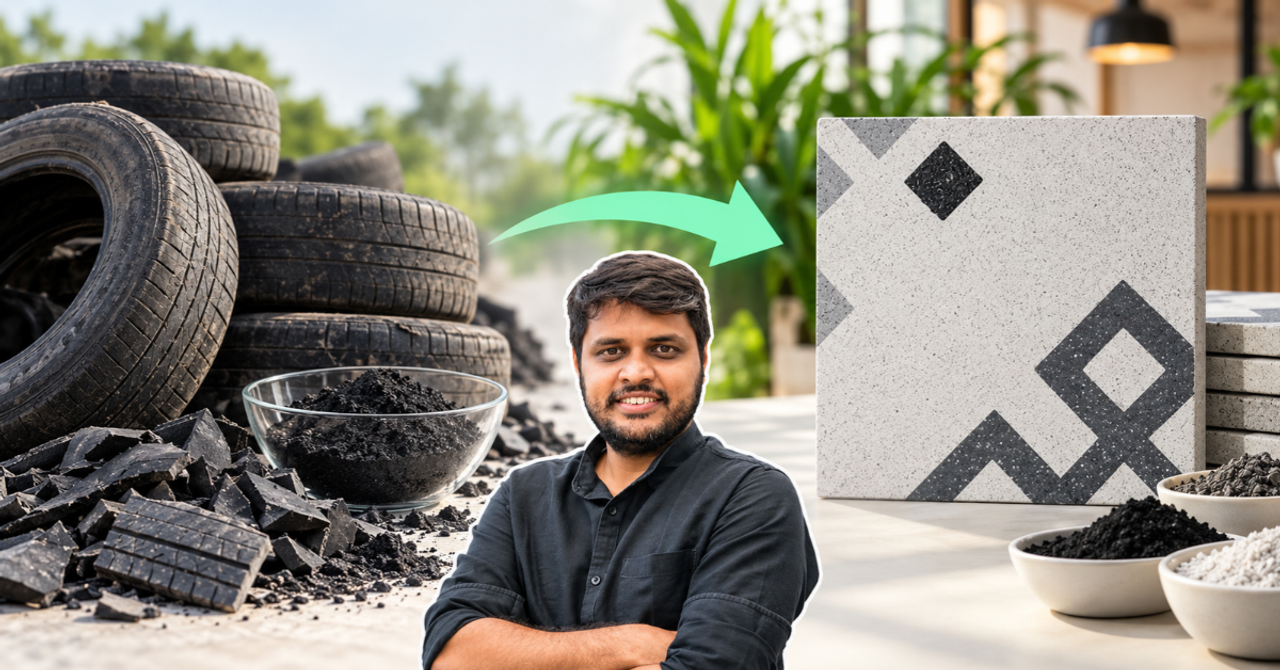
Mumbai-based architect Tejas Sidnal is exploring precisely that possibility. Through his startup, Carbon Craft Design, he is turning recovered black carbon into architectural tiles, giving a second life to a pollutant while rethinking how building materials are made.
The idea took shape when Sidnal, while studying architecture, became fascinated by biomimicry — the practice of drawing inspiration from nature to solve human problems. He began questioning what truly makes a society healthy, looking beyond grand buildings to the essentials of clean air, water and food.

This led him to a contradiction: the construction industry itself contributes significantly to global carbon emissions, yet the materials used to create our built environment are rarely viewed through the lens of pollution.
Could the very carbon waste contributing to the problem become part of the solution?
In 2020, Sidnal launched Carbon Craft Design to turn this question into a tangible innovation: Carbon Tiles.
How does carbon waste become a tile?
Black carbon is produced by the incomplete combustion of fuels and other carbon-rich materials. When released into the atmosphere, it contributes to air pollution and climate change.
Carbon Craft Design sources recovered carbon waste from industrial processes, including tyre recycling and factory pyrolysis. The material is cleaned and processed before being blended with cement, recycled marble powder and marble chips.
View this post on Instagram
The mixture is then compressed using hydraulic presses to create tiles with distinctive geometric patterns. Unlike conventional ceramic tiles, which typically require energy-intensive firing in high-temperature kilns, Carbon Tiles are compressed and allowed to set at room temperature.
According to the startup, this manufacturing process uses around one-fifth of the energy required to make conventional fired tiles. The company also states that every square metre of its tiles prevents the equivalent of 25 kg of carbon dioxide emissions.

Photograph: (Wallparer)
By incorporating recovered carbon into a durable building material, the startup aims to give waste a useful destination instead of allowing it to contribute to the pollution burden.
A little science, a little craft & a lot of creativity
For Sidnal, sustainability is not just about developing a new material. It is also about rethinking how products are made and who gets to make them.
Carbon Craft Design collaborates with ceramic artisans in Morbi, Gujarat, a region known for its tile-making industry. Drawing on traditional craftsmanship, the artisans handcraft the tiles' distinctive geometric patterns, bringing character and detail to the material.

This partnership brings together material research and established craft skills. The recovered carbon and low-energy manufacturing process address environmental concerns, while the artisans' expertise helps create tiles suited to contemporary architectural spaces.
The result is a product that places sustainability alongside aesthetics — an important consideration in an industry where materials must be functional as well as visually appealing.
From an architect’s ideas to showrooms
Turning an environmental concept into a commercially viable product requires more than a promising material. It needs customers willing to use it, too.
Carbon Craft Design has worked with major brands, including Adidas, creating tile patterns for its showrooms. Such projects demonstrate how recycled materials can find a place in commercial interiors, where design and durability matter alongside sustainability.

The startup has also received support from impact investors, including Social Alpha and the Pilani Innovation Entrepreneurship Development Society, and participated in climate-focused accelerators. Its recognitions include the Lexus Design Award India in 2020 and the No Waste Challenge, organised by What Design Can Do and the IKEA Foundation, in 2021.
These milestones reflect a growing interest in materials that rethink the traditional journey from resource extraction to manufacturing and disposal.
Could the buildings of tomorrow be made from today's waste?
No single material can solve the climate crisis. Construction must continue to address emissions across its supply chains, energy use and building lifecycles, while innovations such as Carbon Tiles must demonstrate their durability, safety and environmental benefits at scale.
But Sidnal's work offers a tangible starting point. By recovering carbon waste, reducing the energy used in tile manufacturing and working with traditional artisans, Carbon Craft Design brings together pollution management, sustainable production and local craftsmanship.

Photograph: (Carbon Craft Design)
The idea is both simple and powerful: something that once contributed to an environmental problem can become part of the spaces people inhabit every day.
And perhaps that is where a cleaner future begins — not only by preventing waste, but by learning to see its potential before it is discarded.
Sources:
'Tejas Jindal' by Indian Diaspora
'Tejas Sidnal' by What Design Can Do
Carbon Craft Design
This content is published by The Better India and has not been created or edited by Hello Headlines. View original