Silt, heat and thirsty Nashik leave Nandur’s birds high and dry
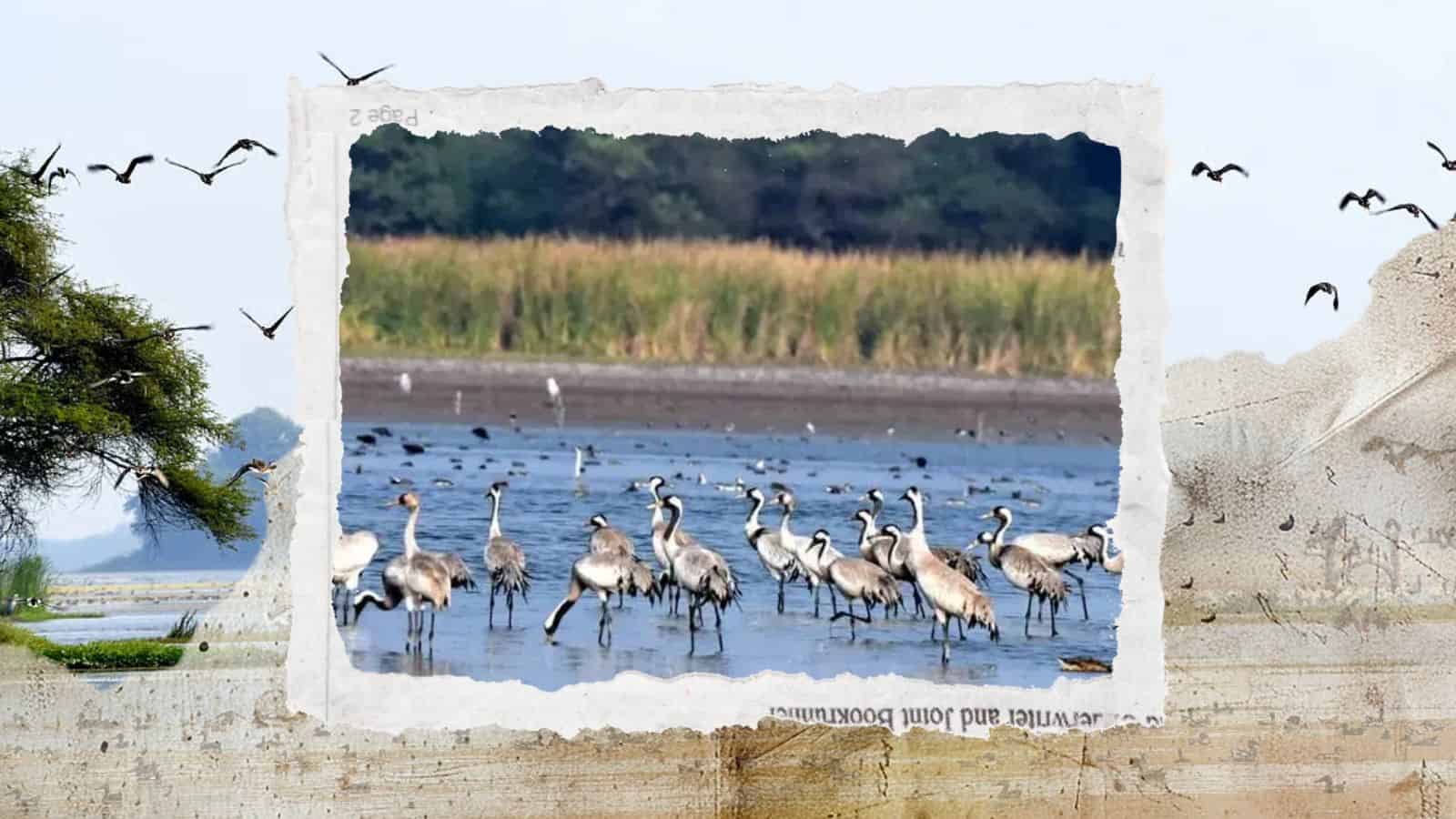
Migratory birds from Siberia, Central Asia and Europe have started arriving at the Nandur Madhameshwar wetlands in Maharashtra’s Nashik district. But more arrivals, and the length of their stay, are likely under threat because the water body is being depleted for three reasons.
Climate change has brought an unprecedented early start to summer-like conditions, water was recently released to irrigate threatened crops and the wetland cannot be replenished from upstream dams.
Stabilising the water spread and keeping it that way through the entire drought period is critical to the bird sanctuary. Such a conflict between the water needs of humans and avians has perhaps not arisen since the Ramsar status was notified in 2019. The birds were arriving decades before that and the site has been given special attention since.
The watchful Forest Department has asked the state Water Resources Ministry to urgently stabilise the water levels by releasing water from the Gangapur and Darna dams.
The arrival season starts with the onset of winter, and activity peaks between October and March, when the birds come in, followed by birdwatchers and other tourists. Nearly 150 species of migratory birds and about 100 species of resident birds are on view.
Sightings include Eurasian spoonbills, flamingos, white and painted storks and glossy ibises, and the total number of birds goes past 30,000.
A wetland born of silt
Nandur Madhameshwar is a Ramsar site, designated under a global convention signed in Iran in 1971, which gives it the status of an “internationally important” wetland. Known as the Nandur or Nandur Madhameshwar Bird Sanctuary, it is not a natural wetland. The shallow water body was formed by siltation behind a 110-year-old British-built dam, and its fringes host the birds that fly in for the winter.
The wetland is part of the water held by the dam. It lies along the southern bank of the Godavari, near its confluence with the Kadwa. Spread over 100 sq km, it is the second largest of Maharashtra’s three Ramsar sites, the other two being Thane Creek, which is larger, and Lonar, which is smaller. The 100 sq km area is protected and so, of course, is the core area.
Watchtowers afford good views of the nesting birds.
The siltation has gone unattended for a long time, with the weir catching fine soil, organic debris and agricultural sediment. Over the years, this poor management has cut the quantity of water that can be impounded from nearly 30 million cubic metres (mcm) to about a quarter of that, 7.27 mcm. Of the original depth of 33 feet, some 25 feet has been lost to silt. That has been a blessing for the migratory birds, and the wetland, some 40 km from Nashik city, is now a major tourist site.
Drinking water comes first
The released water may bring some silt with it, as it does every year. Even so, the only way to replenish the water and enlarge the backwaters for the arriving birds is to release water from the Gangapur and Darna dams, both drinking water sources for about 2 million residents of Nashik city.
However, because of the unprecedented dry conditions, the state government has issued a notification reserving that water for drinking purposes only.
This is also unprecedented. In Maharashtra, as in several other states such as Telangana and Andhra Pradesh, summer has virtually set in.
The unusually high temperatures for October threaten greater losses to evaporation and the government is mindful of this. The decision to release water into the Madhameshwar reservoir rests with the Canal Advisory Committee, which is presided over by the district’s Guardian Minister.
Get the latest updates in Hyderabad City News, Technology, Entertainment, Sports, Politics and Top Stories on WhatsApp & Telegram by subscribing to our channels. You can also download our app for Android and iOS.
This content is published by The Siasat Daily and has not been created or edited by Hello Headlines. View original