Bhutan GLOF triggers flash flood alerts in parts of Assam, West Bengal
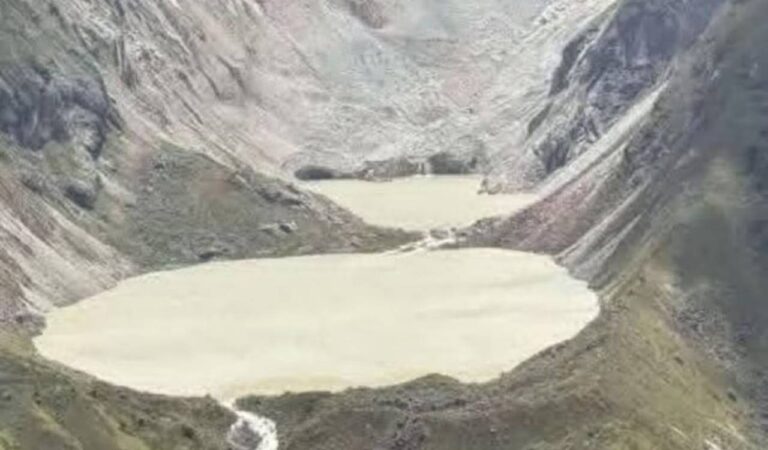
Thimphu: A glacial lake outburst flood (GLOF) at Shintaphu Lake in northwestern Bhutan has triggered flash flood warnings for parts of West Bengal and Assam, with authorities monitoring vulnerable areas along rivers flowing towards the two states.
The incident occurred on Thursday evening in Bhutan’s Gasa district, washing away infrastructure at Gasa Tshachu, a popular natural hot spring situated near the Mo Chhu River. No casualties have been reported, as the area had been evacuated before the floodwaters arrived.
Shintaphu Lake, located at the source of the Mo Chhu River, is among Bhutan’s 17 glacial lakes identified as potentially dangerous. Gasa Tshachu had previously suffered extensive damage from a flash flood on August 26, 2021, when the swollen Mo Chhu changed its course towards the hot spring.
According to reports, the floodwaters have crossed Srigang in Kabesa Gewog, around eight kilometres from Punakha Dzong, raising concerns about downstream areas.
Bhutan has alerted the administrations of West Bengal and Assam about the potential threat to districts bordering the Himalayan kingdom. Assam’s Dhubri district and West Bengal’s Darjeeling hills, Alipurduar and Jalpaiguri have been identified as vulnerable areas.
In West Bengal, the Cooch Behar administration has also alerted residents living along the banks of the Sankosh River. The river originates in northern Bhutan and forms part of the interconnected river system that carries water from the Himalayan region towards the Brahmaputra in Assam.
Authorities have urged residents to remain cautious while assuring them that precautionary measures are being taken.
Appealing for calm, Amit Kumar Shaw, Superintendent of Police of the Alipurduar Police District, said there was no reason for people to panic.
Speaking to IANS, SP Shaw on Thursday said, “People are slightly in panic, and my appeal to everyone is that there is no need to panic in any way. We are in alert mode, the administration is fully prompt, and all agencies are actively working, so there is no issue. We hope that within two to three hours, we will reach a resolution and address whatever trouble the public is facing.”
The flash flood has also damaged infrastructure in Bhutan. An official press release said a solar-powered irrigation lifting system installed earlier this year in the Dochhukha-Dzomlingthang-Ritsa Chiwog area under Guma Gewog in Punakha had been partially damaged by the surge in the Mo Chhu River.
A local leader said the irrigation system had stopped functioning, although officials have yet to determine the full extent of the damage.
Meanwhile, flood-borne debris has covered a section of the Punakha-Gasa Highway in the Dzomlingthang area, potentially affecting road connectivity.
A glacial lake outburst flood occurs when water accumulated in a lake formed by glacial retreat is suddenly released, often after the failure of a natural dam. Such events can be triggered by heavy rainfall, landslides, avalanches, earthquakes or rapid melting of a glacier.
Rising temperatures associated with human-induced climate change are accelerating glacier retreat and increasing concerns over the stability of glacial lakes. Sudden releases of water can generate powerful flood surges, threatening downstream communities, infrastructure and agricultural land.
This content is published by Telangana Today and has not been created or edited by Hello Headlines. View original