Meta Business Agent aims to turn WhatsApp into a 24/7 storefront for D2C brands
A customer browsing a brand’s Instagram page late at night may have questions about a product, need help choosing the right option or want to know when an order will arrive.
If the business cannot respond immediately, that moment of interest could turn into a lost sale.
For direct-to-consumer (D2C) brands, the challenge is not just attracting customers but staying available when they are ready to engage. Meta wants to address this through AI-powered conversations on WhatsApp, turning the messaging platform into a storefront that remains open beyond business hours.
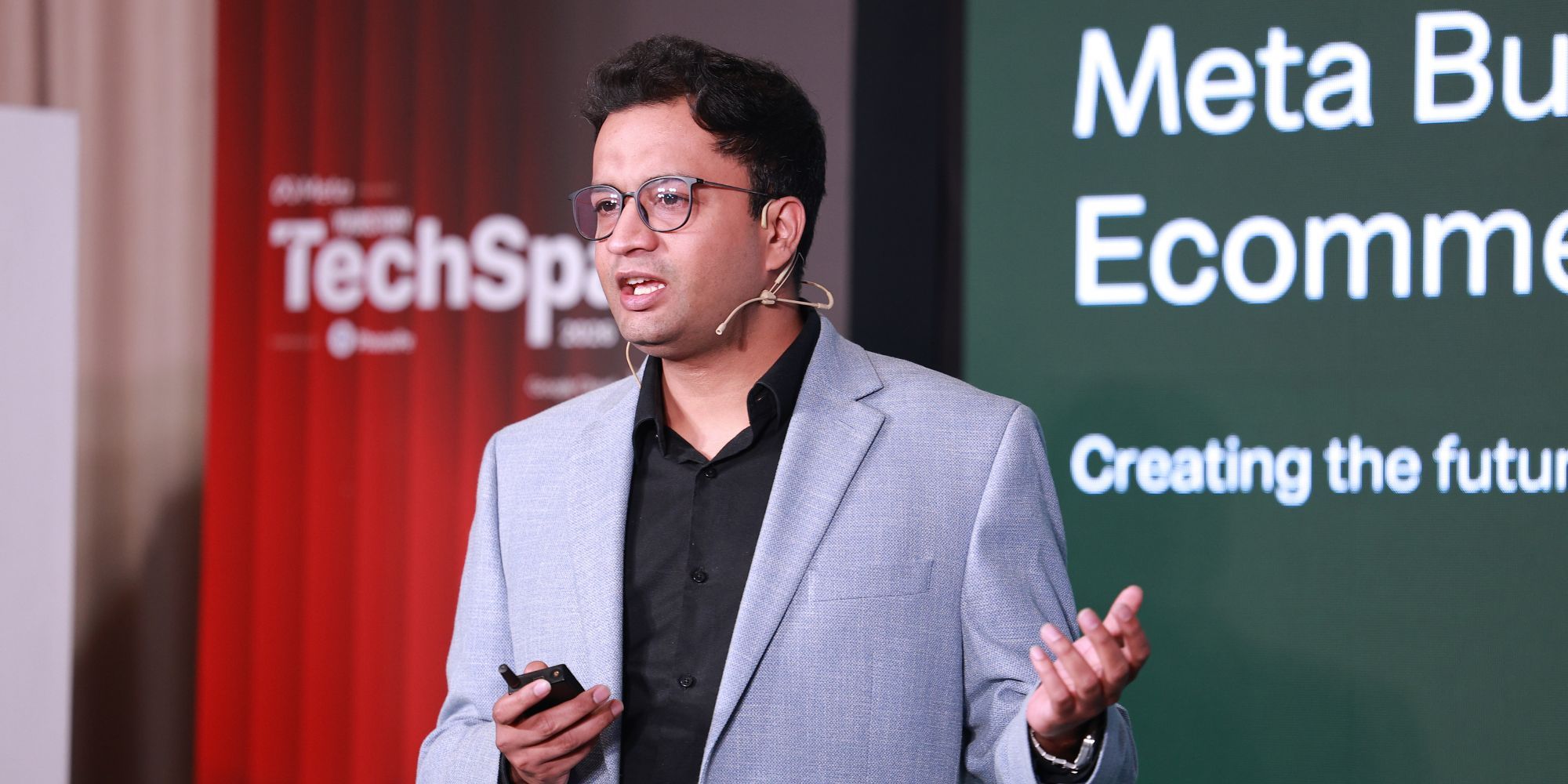
At TechSparks 2026, Piyush Vaidya, Enterprise Sales Specialist for India at Meta, presented Meta Business Agent, a tool designed to help businesses answer customer queries, recommend products and guide shoppers through their purchase journey.
The proposition is to bring product discovery, customer support and commerce closer together, without requiring customers to move between multiple platforms.
From customer queries to conversions
Retailers face several obstacles along the path to purchase, including cart abandonment, limited personalisation, uncertainty about products and the cost of customer support. Vaidya said Meta’s research found that 91% of users drop off after adding products to their carts.
Meta Business Agent aims to reduce this friction by allowing customers to ask questions and explore products through WhatsApp conversations. Businesses can connect their product catalogues and provide instructions that guide how the agent responds. For more complicated queries, the conversation can be handed over to a human representative.
The agent can also retain conversational context, helping businesses offer more relevant responses when customers return. Rather than repeating their requirements, shoppers can continue where an earlier interaction left off.
Businesses remain in control of how the agent operates. They can set its tone, define the topics it handles and choose between manual replies, AI-generated suggestions and automated responses. This gives brands room to introduce automation while keeping customer interactions aligned with their communication style.
Making WhatsApp a shopping destination
Meta is also working to help customers discover businesses directly through WhatsApp. Vaidya outlined entry points such as business contact cards shared in chats, calls to action on WhatsApp Status ads and a search experience intended to make AI-enabled businesses easier to find.
Once customers enter a conversation, businesses can showcase catalogue items, capture leads through forms and facilitate appointment bookings. Piyush Vaidya said payments within WhatsApp are live in India and Brazil, potentially allowing customers to complete more of the purchase journey without leaving the platform.
Businesses can also configure the agent to follow up with shoppers who abandon a purchase, using reminders or relevant product updates to encourage them to return.
Piyush cited Prime Pix Accessories as an example of a small business that reported threefold revenue growth after enabling Meta Business Agent, alongside 30 to 40 daily orders and round-the-clock responses. The presentation did not provide further details on the period or methodology behind the reported growth.
Scaling without losing the human touch
Automation does not mean removing people from customer service. Businesses can test and refine the agent’s responses before customers interact with it, set limits on what it can handle and transfer complex conversations to human staff.
As Piyush Vaidya put it, “You decide when the AI works and who it talks to.”
He said one million businesses had adopted Meta Business Agent at the time of the presentation, with further adoption expected among larger enterprises and businesses using WhatsApp’s business platform.
For D2C brands, the opportunity lies in making customer engagement less dependent on operating hours. If shoppers can discover products, get answers and move towards a purchase in the same conversation, WhatsApp could become both a sales channel and a support layer.
The test will be whether these AI-powered interactions can deliver the personalisation and reliability customers expect while earning the trust needed to turn conversations into lasting relationships.
This content is published by YourStory and has not been created or edited by Hello Headlines. View original